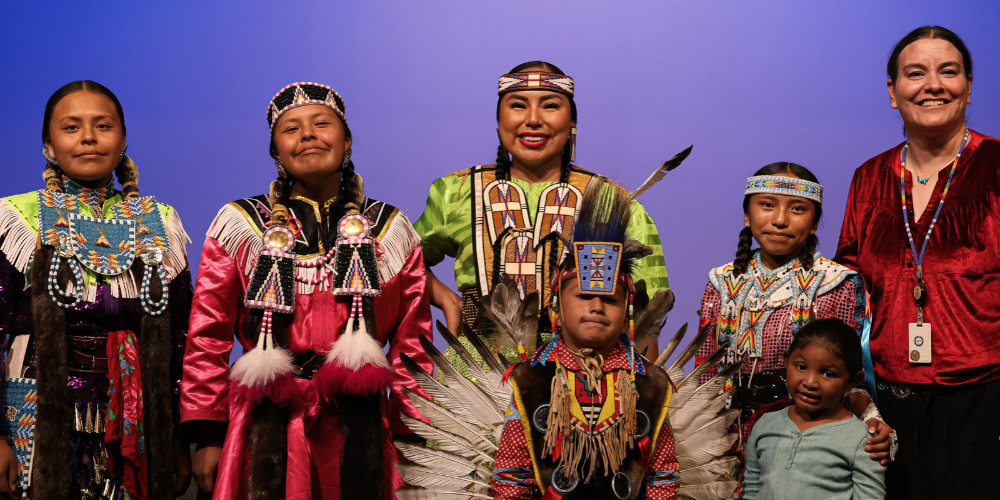
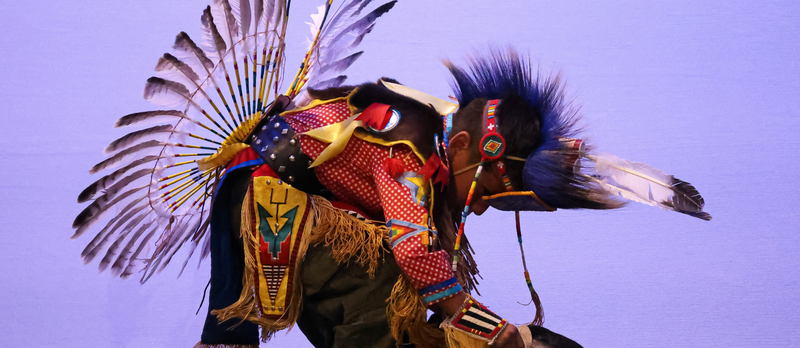
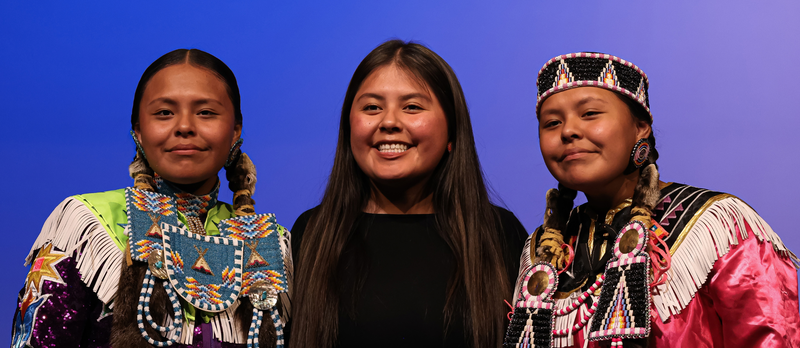
Davis School District families, students, school leaders and community partners gathered for an evening centered on culture, family voice and connection during the district’s Native American Family Connection Night.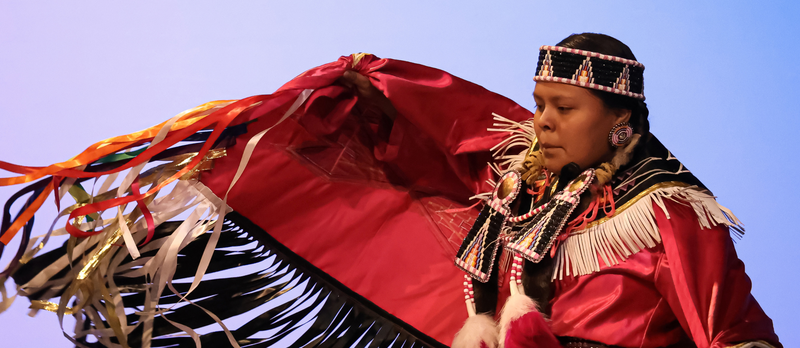 The evening brought Native culture through traditional dancing, cultural teachings and conversations about resources available to Native students and their families. Families also connected with district and community representatives, including the Northwestern Band of the Shoshone and Urban Indian Center.
“One thing that I want you to know is that your voice matters,” Federal Programs Director Sue Caldwell told families. “You as parents and families, know your children best. And we want to give you an invite to help shape the activities and priorities for Native students in our district.”
 Native American Specialist Sarai Neumarker shared how the district’s Title VI/Native American Education Program supports students academically, culturally and personally. The program serves nearly 800 Native American students and provides tutoring, academic support, scholarship information, cultural education and family engagement.
“Our mission is to support Native students, academically, culturally, personally, by building connections amongst students, families, schools and Native communities so every student has the opportunity to thrive,” Neumarker said.
 That connection begins well before graduation. The program works with students throughout their education through tutoring, attendance support, connections with school staff, scholarship information and opportunities to learn about and maintain connections to their culture. The program is also providing Native American books to elementary school libraries and offers a Navajo language class for students in grades 9-12.
“We’re not just celebrating graduation,” Neumarker said. “We are building the pathway to get there.”
That work is showing progress. After the Native American student graduation rate fell to 76% following the COVID-19 pandemic, it increased to 80% in 2024 and reached 94% last year. The Navajo language class has also grown from nine students last year to 15 this year.
“In our Navajo class, they learn the connection to the culture,” Neumarker said. “We talk about winter stories. We talk about being a part of a culture. And we have kids that aren’t even Navajo that are attending this class.”
The Office of Equal Opportunity also shared how it works to protect students’ dignity and create spaces where every student feels they belong. The office provides districtwide training, mentoring, school programs and support when students or families have concerns about discrimination or harassment.
“We want students to feel like they belong in schools, because when students feel like they belong in schools, they have better access to their academics, and they can be more successful in school,” said Ben Hill, director of the Office of Equal Opportunity.
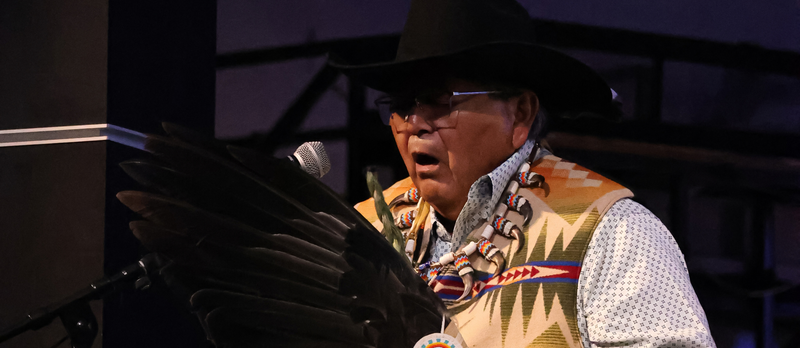
 Superintendent Dr. Dan Linford encouraged families to continue sharing their experiences and perspectives with the district. He emphasized that belonging and academic achievement are not separate parts of a student’s experience.
“There is no distinction between our work, belonging, inclusion and our academic work,” Linford said.
Linford also thanked Native students and families for the strength, wisdom and culture they bring to Davis School District.
 “These are your schools, and this is your school district,” Linford said. “Your 1% matters a lot to us.”
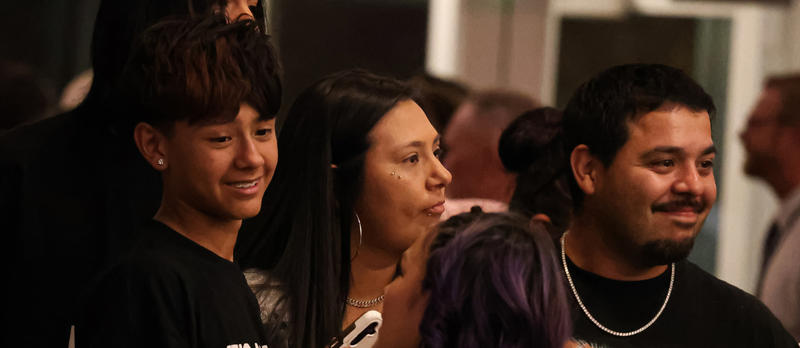
Many principals and district administrators attended the event to support Native students and their families, spending time visiting with families and participating in the evening. The formal program ended with a round dance led by Patricia John, bringing students, families, school leaders and community members together on the floor hand-in-hand.
“We need your voice,” Neumarker said. “We want to be here to support you in your educational needs.”
The evening was a reminder that connection is not an extra part of education. It is part of creating schools where students and families feel seen, heard and supported.